

Importance of Choosing a Bible Version
“Your word is a lamp to my feet and a light to my path.” – Psalm 119:105
Scripture guides, teaches, and strengthens, making the version you use an important part of your faith journey.
Why Different Translations Exist
“Give the sense, so they understood the reading.” – Nehemiah 8:8
Different versions aim to help readers understand Scripture clearly based on language, audience, and purpose.
The Value of Readability
“Write the vision, and make it plain upon tables.” – Habakkuk 2:2
A readable translation helps you connect easily with the message, especially during daily devotion or study.
The Goal of Accurate Understanding
“Every word of God is pure.” – Proverbs 30:5
A trustworthy translation helps preserve meaning while making God’s Word accessible to modern readers.
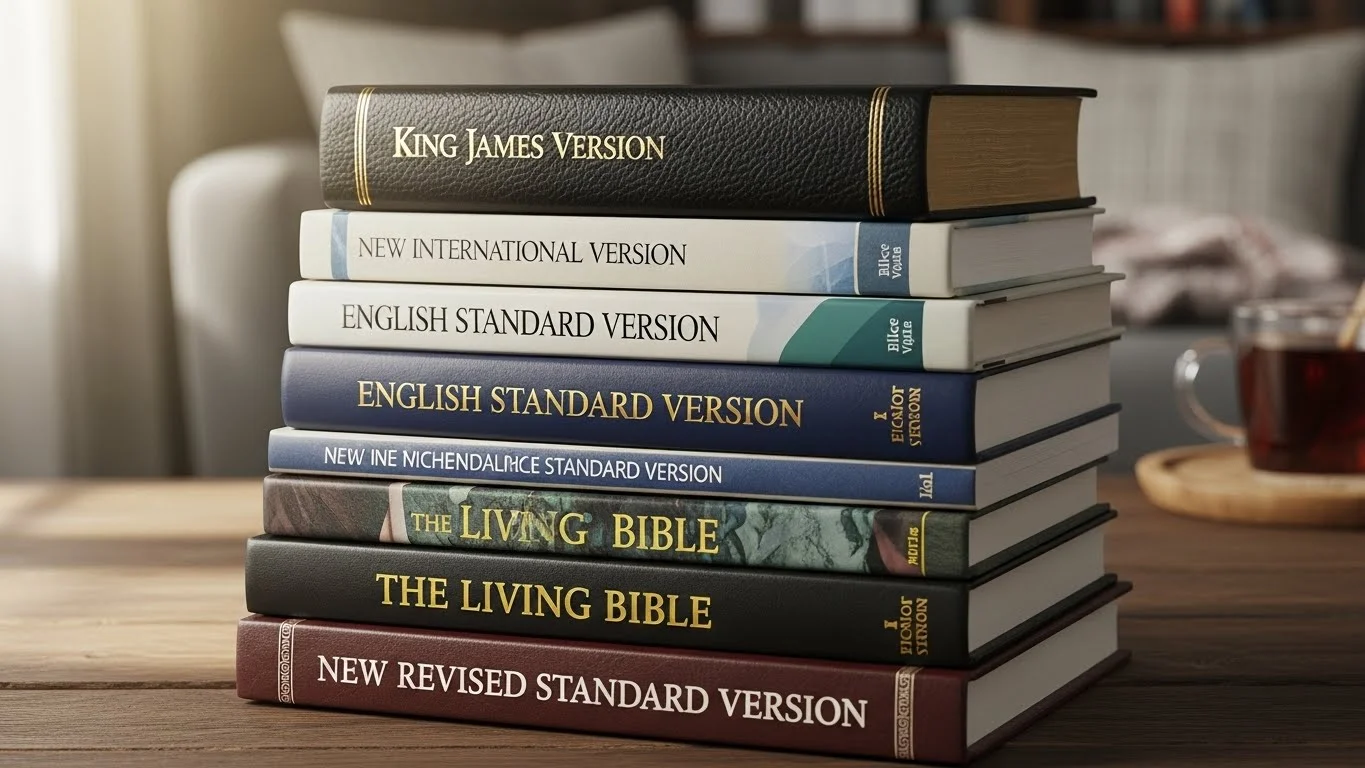
Word-for-Word Translations (More Literal)
“Sanctify them through Your truth; Your word is truth.” – John 17:17
Literal translations prioritize accuracy, making them helpful for serious study or deeper understanding.
Thought-for-Thought Translations (More Readable)
“Give me understanding, that I may learn Your commandments.” – Psalm 119:73
These translations explain meaning in clearer, simple language, making reading smoother.
Balanced Translations (Between Literal and Readable)
“Teach me good judgment and knowledge.” – Psalm 119:66
These versions balance accuracy with readability and are great for both daily reading and study.
Versions Good for Beginners
“The entrance of Your words gives light.” – Psalm 119:130
Some translations are especially helpful for those starting their Bible reading journey.
Versions Good for Deep Study
“Search the Scriptures.” – John 5:39
Study-focused translations help uncover deeper meaning, original context, and theological detail.
Versions Focused on Contemporary Language
“He that readeth, let him understand.” – Matthew 24:15
Modern-language Bibles help readers connect with familiar vocabulary and expressions.
Versions Best for Memorization
“Thy word have I hid in my heart.” – Psalm 119:11
Some translations are written with rhythmic wording that is easier to memorize.
Why Comparing Translations Helps
“In the multitude of counselors there is safety.” – Proverbs 11:14
Reading multiple versions can deepen understanding and reveal fuller meaning.
Importance of Personal Connection
“I will meditate in Your precepts.” – Psalm 119:15
The best translation is often the one you will read consistently, reflect on, and connect with.
Finding a Version That Strengthens Your Mind
“Be renewed in the spirit of your mind.” – Ephesians 4:23
Reading a translation that speaks to you clearly helps renewal, encouragement, and peace.
Finding a Version That Encourages Peace
“Great peace have they which love Your law.” – Psalm 119:165
Translations that feel calming and comfortable can support spiritual rest and stability.
Versions That Offer Simplicity and Clarity
“The commandment is clear, enlightening the eyes.” – Psalm 19:8
Simpler versions help new readers and those who prefer straightforward reading.
Versions That Maintain Traditional Language
“The grass withers, the flower fades, but the word of our God stands forever.” – Isaiah 40:8
Traditional translations preserve familiar phrases cherished across generations.
Versions That Emphasize Meaning Over Form
“Give me understanding according to Your word.” – Psalm 119:169
Meaning-focused translations help uncover the heart of each passage.
Reading With Purpose No Matter the Version
“Blessed are they that hear the word of God and keep it.” – Luke 11:28
The spiritual impact of Scripture comes from reading with a sincere and open heart.
