
Best Beginner Bible for Adults
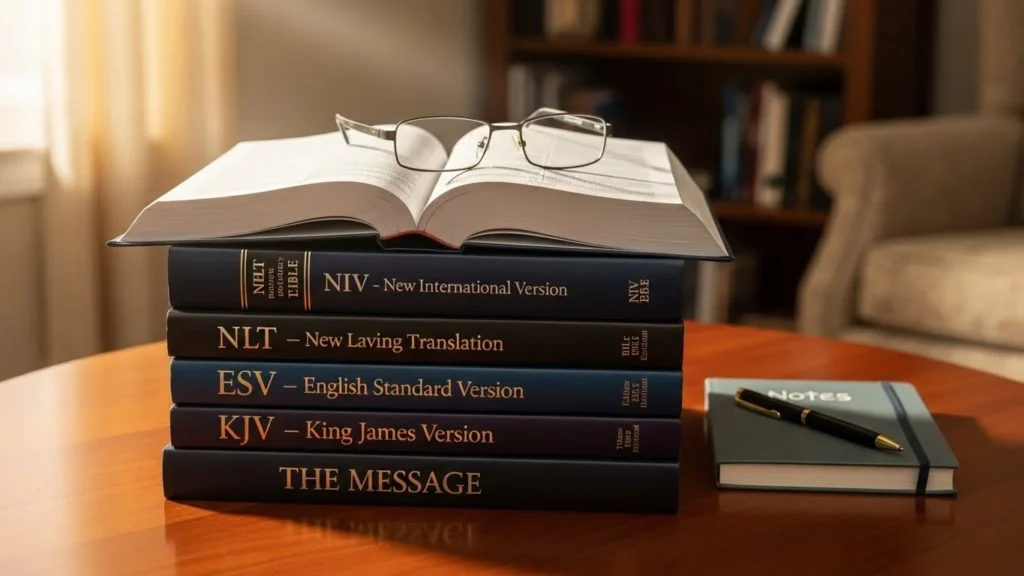
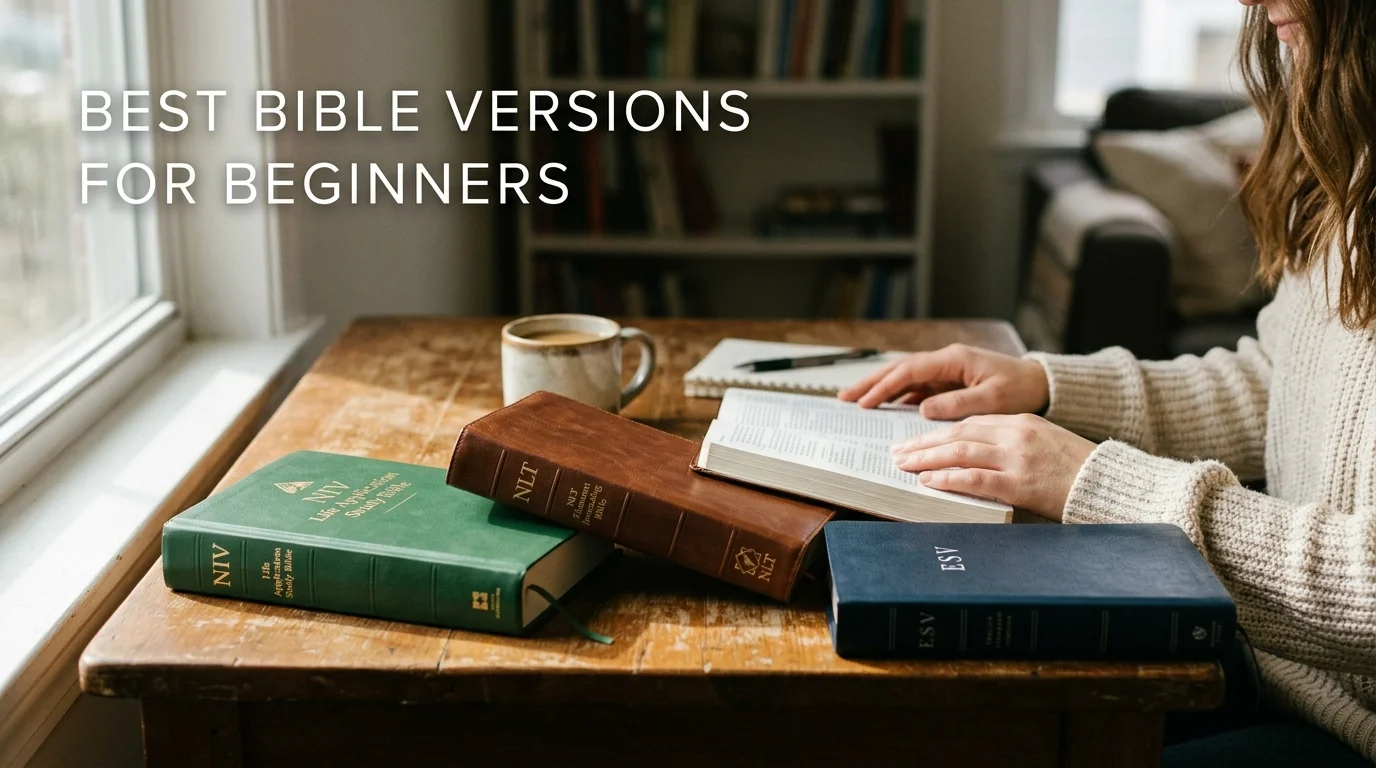
The best beginner Bible for adults is one that balances easy readability with faithful translation of the original Hebrew and Greek texts. Most Bible teachers recommend versions like the New Living Translation (NLT) and the New International Version (NIV) because they are written in clear, modern English that is easy to understand without losing the meaning of Scripture.
The NLT is often considered the easiest to read, while the NIV is widely used in churches and Bible study groups. Both help new readers build confidence in understanding God’s Word.
“Your word is a lamp to my feet and a light to my path.” (Psalm 119:105)
Best Bible Version for Study
The best Bible version for study is one that stays closer to the original languages while still being readable. The NIV, English Standard Version (ESV), and New American Standard Bible (NASB) are commonly used for deeper Bible study.
- NIV: Balanced between accuracy and readability
- ESV: More word-for-word, good for serious study
- NASB: Very literal translation for detailed analysis
Many study Bibles also include notes, maps, and explanations to help readers understand context.
“Study to show thyself approved unto God…” (2 Timothy 2:15)
Best Bible Version for Beginners (Reddit Opinion Summary)
Many online communities like Reddit often recommend the NLT, NIV, and ESV as the best beginner-friendly Bible versions. Readers commonly say:
- NLT is the easiest to understand
- NIV is the best balance of clarity and accuracy
- ESV is slightly more advanced but still readable
The general agreement is simple: the best Bible is the one you will actually read and understand consistently.
Which Bible Version Is the Most Accurate and Easy to Understand?
There is no single “perfect” Bible translation, but some versions balance accuracy and readability well. The NIV is often considered the best middle ground, while the NLT is easier to read but more interpretive.
- NLT: Very easy to understand (thought-for-thought)
- NIV: Balanced accuracy and clarity
- ESV: More literal and closer to original text
So, if you want both clarity and reliability, the NIV is usually the top recommendation.
“All Scripture is given by inspiration of God…” (2 Timothy 3:16)
Best Bible for Beginners (Catholic)
For Catholic beginners, the most commonly recommended Bible is the New American Bible (NABRE) or the Revised Standard Version – Catholic Edition (RSV-CE).
These include the full Catholic canon of Scripture and are approved for Catholic teaching.
- NABRE: Modern, easy-to-read Catholic Bible
- RSV-CE: More traditional but very accurate
Both are widely used in Catholic Mass and study groups.
“Blessed are those who hear the word of God and keep it.” (Luke 11:28)
NIV Bible for Beginners
The New International Version (NIV) is one of the most popular Bibles worldwide for beginners. It uses clear modern English while staying faithful to original manuscripts.
It is widely used in churches, making it easy to follow sermons and group Bible studies. Many beginners choose NIV because it is simple but still suitable for long-term study.
“Your word is truth.” (John 17:17)
NLT Bible for Beginners
The New Living Translation (NLT) is often considered the easiest Bible version for beginners. It is written in natural, conversational English and focuses on conveying meaning rather than word-for-word structure.
This makes it ideal for new readers, devotionals, and daily reading because it feels like reading a modern book while still teaching biblical truth.
“The unfolding of your words gives light…” (Psalm 119:130)
Best Bible for Beginners (Women)
The best Bible for beginner women is usually one that is easy to read and includes devotionals or study notes that help with personal growth. Popular choices include the NLT Women’s Study Bible and NIV Women’s Study Bible.
These Bibles often include:
- Devotional reflections
- Life application notes
- Encouragement for daily faith and spiritual growth
The goal is to help women understand Scripture and apply it to everyday life.
“She is clothed with strength and dignity…” (Proverbs 31:25)

New Living Translation (NLT)
The New Living Translation uses everyday English and a thought‑for‑thought approach to make Scripture accessible and engaging. It is widely recommended for new readers because it balances readability with fidelity to the original texts, helping God’s message feel warm and clear.
New International Version (NIV)
The New International Version blends accuracy and readability, making it one of the most popular Bible versions worldwide. Written in contemporary English at around a 7th‑grade reading level, the NIV is an excellent all‑purpose choice for beginners who want a balance of clarity and depth.
Contemporary English Version (CEV)
Designed for ease of understanding, the CEV uses simple vocabulary and short sentences. It’s especially helpful for readers encountering the Bible for the first time, families, or public reading contexts.
Good News Bible (GNB)
Also known as the Today’s English Version, the Good News Bible offers very straightforward language and clear structure. Its simple vocabulary makes it ideal for absolute beginners, young readers, or anyone reading in a second language.
Easy‑to‑Read Version (ERV)
The Easy‑to‑Read Version lives up to its name with clear grammar and basic vocabulary. This translation is especially welcoming for new believers or those who find traditional versions difficult to follow.
New International Reader’s Version (NIrV)
Written at a lower reading level with short, simple sentences, the NIrV is one of the most accessible translations available. It’s a strong option for beginners of all ages and reading abilities.

Christian Standard Bible (CSB)
The CSB strikes a helpful balance between modern readability and original meaning. It uses “optimal equivalence” translation philosophy, making it approachable for beginners while still useful for later study.
English Standard Version (ESV)
The English Standard Version leans more toward word‑for‑word translation but remains accessible. Many readers find it a good step from very simple versions into more traditional language while still understanding key themes.
New King James Version (NKJV)
The NKJV updates the classic King James Version into modern English. Beginners who appreciate a classic style without archaic language may find this version appealing.
World English Bible (WEB)
The World English Bible offers a modern English translation that is public domain, making it widely accessible for free online use. Its straightforward language supports easy reading and study.
The Message (MSG)
Although technically a paraphrase rather than a strict translation, The Message makes Scripture feel like a dynamic, contemporary narrative. Pairing it with a more standard version can help bring Bible stories to life for beginners.
New Revised Standard Version (NRSV)
The NRSV uses modern English and inclusive language while maintaining strong scholarship and accuracy. It reads clearly and is widely used in academic and church settings, making it a good stepping stone for deeper study.
Open English Bible (OEB)
The Open English Bible is a modern translation released into the public domain. Its accessibility and modern phrasing make it worth exploring for new readers wanting free, readable Scripture online.
Readability and Learning Tools
Beginners often benefit from editions with study notes, book introductions, maps, and concordances, which help explain context and meaning without overwhelming. Many of the translations listed above are available in Study Bible formats that include such aids.
Translation Styles Explained
Bible versions differ in approach:
Thought‑for‑thought translations (like NLT and CEV) aim for clear meaning over literal wording.
Word‑for‑word translations (like ESV and NKJV) stick closer to original language structure.
Paraphrases (like The Message) prioritize readability and contemporary expression.
Choosing a style that matches your goals—whether devotional reading, study, or daily reflection—can make the Bible more approachable and meaningful.
