

Honesty in Speech
“Do not lie to one another, seeing that you have put off the old self.” — Colossians 3:9
Truthful communication reflects spiritual renewal and integrity in daily life.
The Lord Hates Lying
“A false witness will not go unpunished, and he who breathes out lies will perish.” — Proverbs 19:9
God warns that dishonesty has consequences, emphasizing the importance of truth.
Deception Leads to Ruin
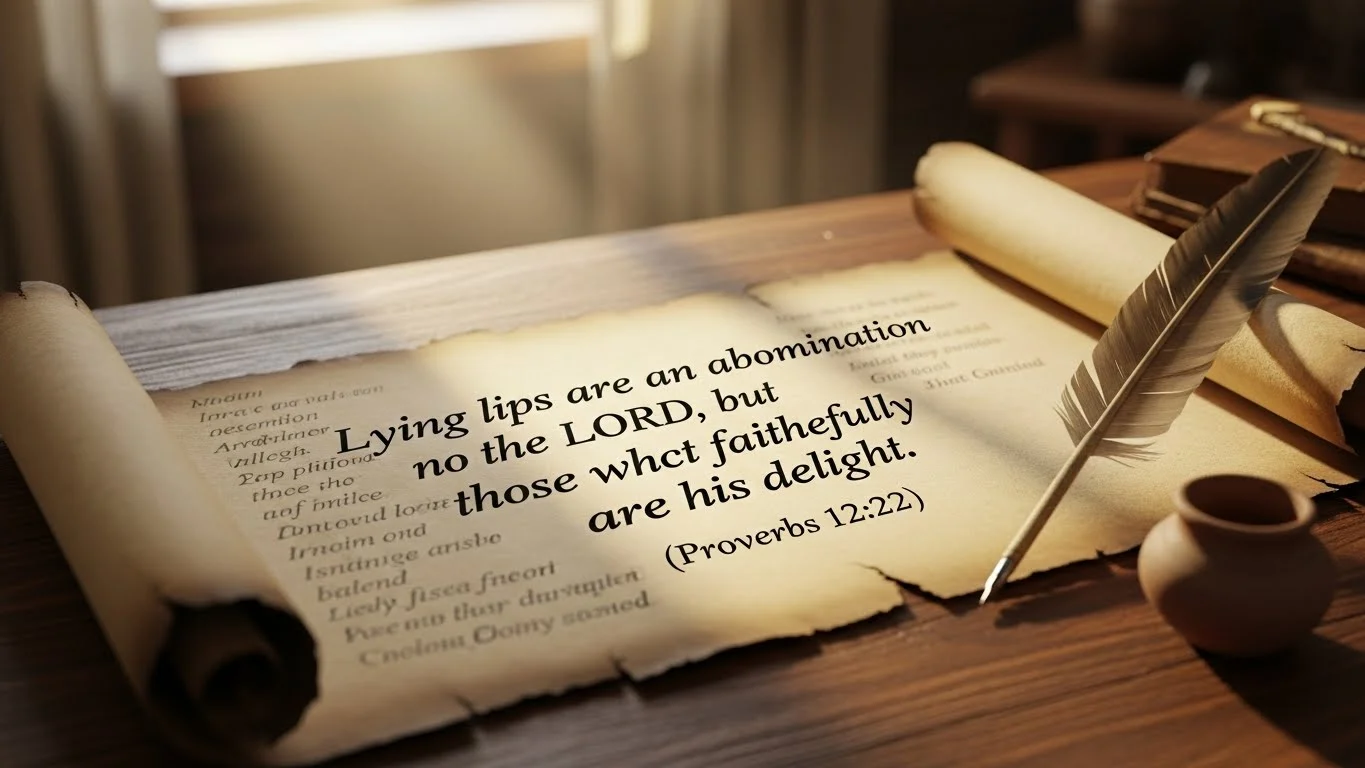
“Lying lips are an abomination to the Lord.” — Proverbs 12:22
Dishonesty is spiritually harmful, while truth pleases God and nurtures trust.
Speak Truthfully
“Let each of you speak the truth with his neighbor.” — Ephesians 4:25
Honest communication strengthens relationships and community.
Avoid Falsehood
“Keep your tongue from evil, and your lips from speaking deceit.” — Psalm 34:13
Guarding speech helps cultivate a life of honesty and integrity.
Integrity in Actions
“Whoever walks in integrity walks securely.” — Proverbs 10:9
Honesty in all actions brings stability and protection from harm.
Truthfulness Reflects God’s Nature
“Sanctify them in the truth; your word is truth.” — John 17:17
Living truthfully aligns with God’s character and His Word.
Consequences of Lying
“The wages of deceit is death, but the reward of truth is life.” — Proverbs 21:6
Deception carries consequences, while honesty brings life and blessing.
Avoid False Witness
“You shall not bear false witness against your neighbor.” — Exodus 20:16
Honest testimony protects relationships, justice, and community trust.
Truth Brings Freedom
“Then you will know the truth, and the truth will set you free.” — John 8:32
Truthfulness liberates from guilt, deceit, and spiritual bondage.
Rebuke Lying
“Do not lie in judgment, nor speak falsely.” — Leviticus 19:11
Upholding truth ensures fairness and righteousness in all interactions.
Faithful Speech
“Whoever utters truth shows forth righteousness.” — Proverbs 12:17
Truthful words reveal moral integrity and honor God.
Avoid Hypocrisy
“Beware of false prophets, who come to you in sheep’s clothing.” — Matthew 7:15
Lying often disguises harmful intentions; discernment protects spiritual health.
Truth Strengthens Character
“Better is a poor man who walks in his integrity than a rich man who is crooked in his ways.” — Proverbs 28:6
Integrity matters more than material gain, reinforcing moral character.
Sincere Speech
“Let your speech always be gracious, seasoned with salt, so that you may know how you ought to answer each person.” — Colossians 4:6
Honesty combined with kindness creates constructive, truthful dialogue.
Lying Is Sinful
“You shall not steal; you shall not deal falsely; you shall not lie to one another.” — Leviticus 19:11
God equates dishonesty with sin, guiding moral conduct.
God Knows All Falsehood
“The Lord detests lying lips, but he delights in people who are trustworthy.” — Proverbs 12:22
Trustworthiness pleases God, while deceit distances us from Him.
Avoid Gossip and Lies
“A dishonest witness mocks justice, and the mouth of the wicked devours evil.” — Proverbs 19:28
Lying harms others and undermines justice and community harmony.
Truthful Heart
“Create in me a clean heart, O God, and renew a right spirit within me.” — Psalm 51:10
Honesty begins in the heart and manifests in speech and actions.
Encourage Truth in Others
“Exhort one another every day, as long as it is called ‘Today.’” — Hebrews 3:13
Supporting others to speak truthfully strengthens communities and relationships.
