
Start With the Gospels
“In the beginning was the Word.” — John 1:1
Beginning with the Gospels—Matthew, Mark, Luke, and John—helps you understand Jesus’ life, teachings, and ministry.
Read Genesis for Foundations
“In the beginning, God created the heavens and the earth.” — Genesis 1:1
Genesis introduces God’s creation, humanity, and the origin of God’s covenant with His people.
Explore Psalms for Reflection
“The Lord is my shepherd; I shall not want.” — Psalm 23:1
Psalms offers prayers, praises, and encouragement, perfect for meditative reading.
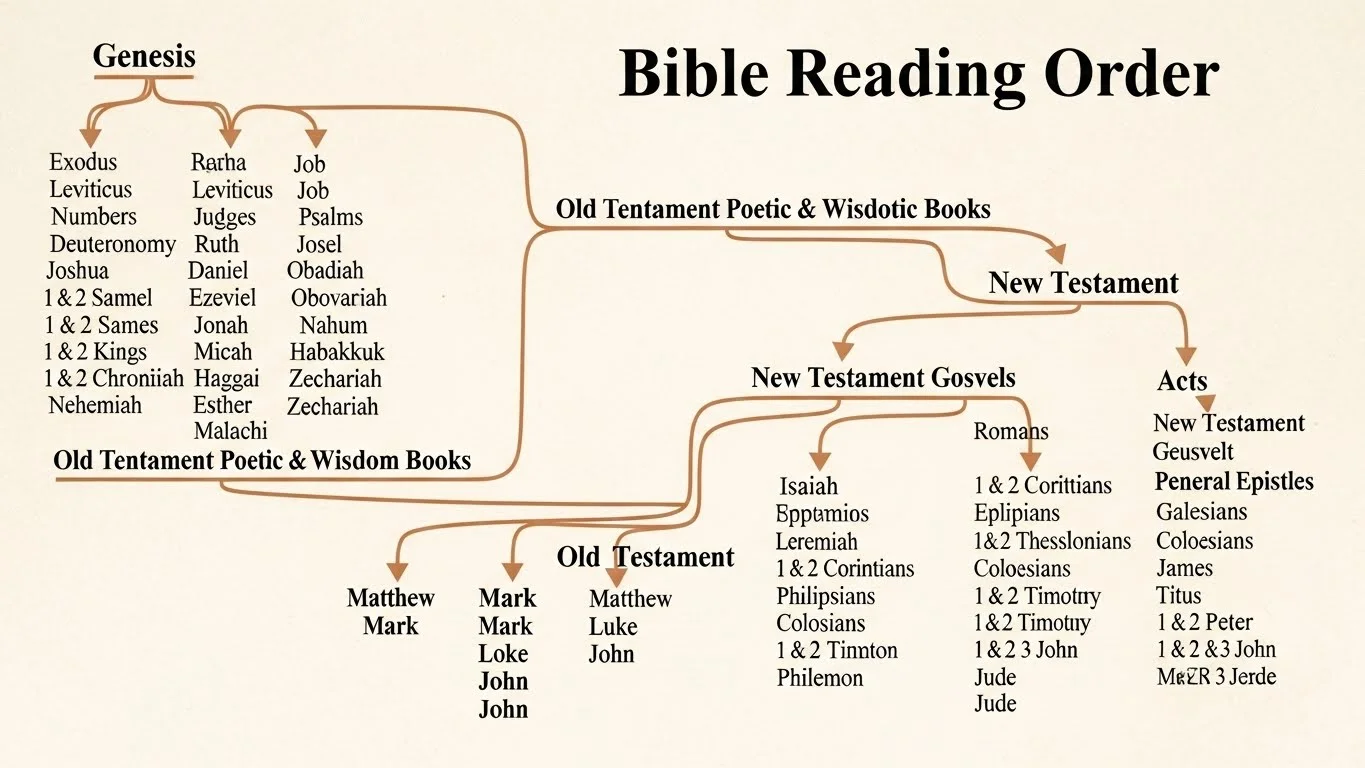
Study Proverbs for Wisdom
“Trust in the Lord with all your heart.” — Proverbs 3:5
Proverbs provides practical guidance for living a God-centered life.
Read Exodus for God’s Deliverance
“The Lord is my strength and my song.” — Exodus 15:2
Exodus recounts God’s power and faithfulness in freeing His people.
Follow With Acts for Early Church History
“You will receive power when the Holy Spirit comes upon you.” — Acts 1:8
Acts highlights the spread of God’s message and the role of the Holy Spirit.
Explore Key Letters in the New Testament
“Do everything in love.” — 1 Corinthians 16:14
Reading letters from Paul, Peter, James, and John helps understand guidance for living in faith.
Read Romans for Doctrinal Clarity
“For all have sinned and fall short of the glory of God.” — Romans 3:23
Romans provides foundational teaching on salvation, grace, and God’s plan.
Read Historical Books for Context
“He judged Israel according to all that Moses commanded.” — Joshua 1:7
Joshua, Judges, and Kings show God’s interactions with His people and lessons in obedience.
Explore Isaiah for Prophecy
“For unto us a child is born.” — Isaiah 9:6
Isaiah provides insight into God’s promises and future hope.
Read Job for Endurance
“Though He slay me, yet will I trust Him.” — Job 13:15
Job teaches faith and perseverance through suffering.
Read Daniel for Faithfulness
“God is able to deliver you from the lion’s den.” — Daniel 6:27
Daniel demonstrates courage and trust in God under pressure.
Explore Revelation Last
“Behold, I am coming soon.” — Revelation 22:12
Reading Revelation last allows you to understand its symbolism with full knowledge of God’s story.
Incorporate Minor Prophets
“Return to the Lord and He will have mercy.” — Hosea 6:1
Minor prophets highlight God’s justice, mercy, and call to repentance.
Read Chronologically if Desired
“The Lord is faithful to all His promises.” — Psalm 145:13
A chronological approach helps see the timeline of God’s work through history.
Include Wisdom and Poetry
“Your word is a lamp to my feet.” — Psalm 119:105
Job, Ecclesiastes, and Song of Solomon deepen understanding of life, faith, and love.
Use Thematic Reading
“Do everything in love.” — 1 Corinthians 16:14
Focusing on themes like grace, mercy, or joy can make reading Scripture more applicable to daily life.
Revisit Psalms and Prayer Verses
“Let everything that has breath praise the Lord.” — Psalm 150:6
Regular meditation on Psalms strengthens faith and encourages gratitude.
Study With Reflection
“Meditate on these things.” — Philippians 4:8
Reflecting on what you read deepens understanding and spiritual growth.
End With a Devotion Plan
“Seek first the kingdom of God.” — Matthew 6:33
A consistent devotional routine ensures that Bible reading leads to life transformation.
