
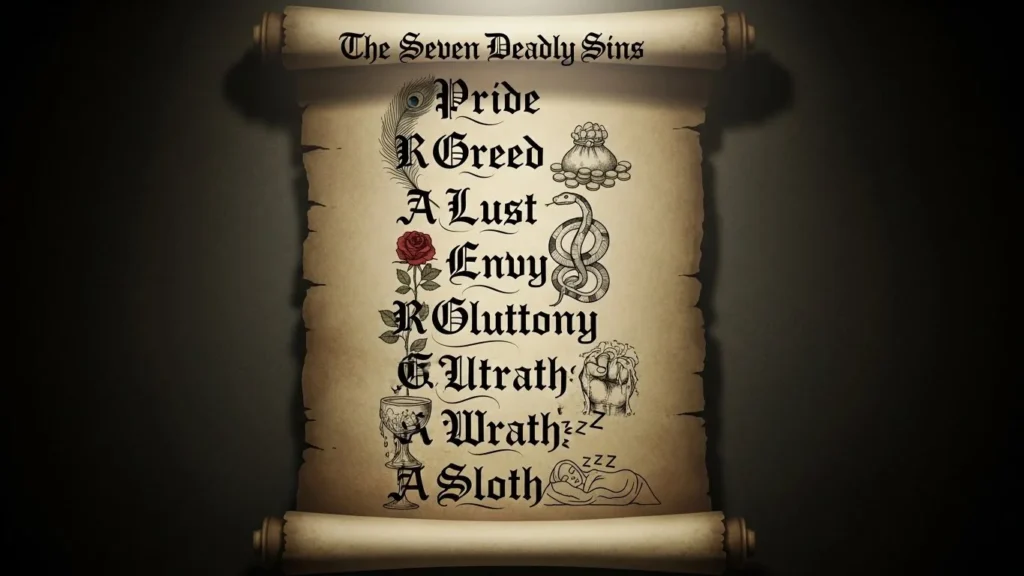
Sin of Pride
“Pride goes before destruction.” — Proverbs 16:18
Pride is presented as a root of many other harmful actions because it turns the heart away from humility and wisdom.
Sin of Greed
“Keep your life free from the love of money.” — Hebrews 13:5
Greed shifts trust away from God and toward possessions, creating spiritual imbalance.
Sin of Lying
“Do not lie to one another.” — Colossians 3:9
Lying breaks trust and damages relationships, making honesty essential in Scripture.
Sin of Envy
“Envy rots the bones.” — Proverbs 14:30
Envy steals peace and creates bitterness, preventing contentment.
Sin of Anger
“Human anger does not produce the righteousness God desires.” — James 1:20
Uncontrolled anger leads to harmful words and actions.
Sin of Sexual Immorality
“Flee from sexual immorality.” — 1 Corinthians 6:18
Scripture teaches respect for purity and the sacredness of the body.

Sin of Idolatry
“You shall have no other gods before Me.” — Exodus 20:3
Idolatry shifts devotion to things that cannot satisfy or guide.
Sin of Hatred
“Anyone who hates a brother or sister is in darkness.” — 1 John 2:11
Hatred closes the heart and disconnects people from love and compassion.
Sin of Gossip
“A perverse person stirs up conflict.” — Proverbs 16:28
Gossip spreads negativity and damages reputations.
Sin of Laziness
“A little sleep… and poverty will come on you.” — Proverbs 6:10–11
Laziness is discouraged because it leads to missed responsibilities.
Sin of Drunkenness
“Do not get drunk on wine.” — Ephesians 5:18
Scripture highlights moderation and self-control as important values.
Sin of Hypocrisy
“Woe to you… hypocrites.” — Matthew 23:27
Hypocrisy harms spiritual integrity and creates barriers to truth.
Sin of Covetousness
“You shall not covet.” — Exodus 20:17
Coveting fosters dissatisfaction and unhealthy desire for what others have.
Sin of Murder
“You shall not murder.” — Exodus 20:13
Human life is sacred, and intentional harm is strongly forbidden.
Sin of Stealing
“You shall not steal.” — Exodus 20:15
Stealing breaks trust and violates the rights of others.
Sin of Dishonoring Parents
“Honor your father and your mother.” — Exodus 20:12
Respect for parents is foundational for social and spiritual harmony.
Sin of Unforgiveness
“Forgive, and you will be forgiven.” — Luke 6:37
Unforgiveness creates emotional and spiritual burdens.
Sin of Blasphemy
“Do not misuse the name of the Lord.” — Exodus 20:7
Blasphemy involves disrespecting what is holy.
Sin of Rebellion
“Rebellion is like the sin of witchcraft.” — 1 Samuel 15:23
Rebellion represents a deliberate refusal to follow God’s guidance.
Sin of Witchcraft and Occult Practices
“Do not practice divination or seek omens.” — Leviticus 19:26
Scripture discourages reliance on spiritual practices outside God’s instruction.