

Locust in the Bible
“So Moses stretched out his staff… and the Lord brought an east wind… by morning the wind had brought the locusts.” — Exodus 10:13
This passage shows locusts as a sign of divine judgment during the plagues of Egypt.
Locusts Represent Devastation
“They covered all the ground until it was black. They devoured all that was left.” — Exodus 10:15
Locusts symbolize complete destruction when people refuse to heed divine warnings.
A Call to Repentance
“What the locust swarm has left the great locusts have eaten.” — Joel 1:4
Joel uses locust imagery to call the people toward reflection and change.
God Can Restore What Is Lost
“I will restore to you the years the locusts have eaten.” — Joel 2:25
A powerful reminder that God can rebuild and renew even after seasons of loss.
Locusts as a Symbol of Consequence
“If you do not obey… you will be defeated… locusts will consume your fields.” — Deuteronomy 28:38
Locusts represent the natural consequences of disobedience and drifting from truth.
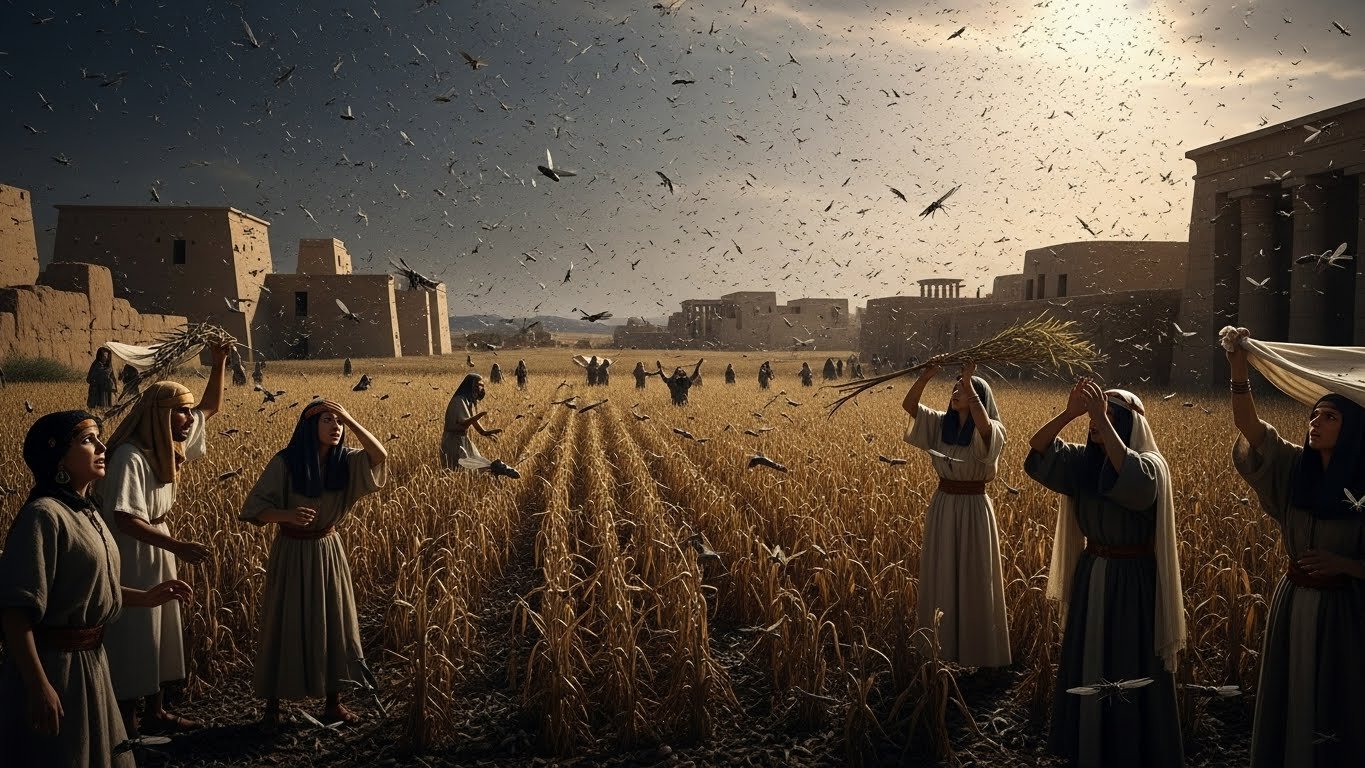
Locusts in Times of Drought
“When locusts or grasshoppers… plague the land… hear from heaven their prayer.” — 2 Chronicles 7:13–14
This shows that even in times of crisis, God listens to those who turn back to Him.
Locusts as a Test of Faith
“You have planted them, but they have taken root… yet locusts devour the produce.” — Jeremiah 12:13
The image of locusts highlights moments when faith is tested by loss or struggle.
Locusts Reveal Human Vulnerability
“The locusts have no king, yet they advance together in ranks.” — Proverbs 30:27
This verse reminds us of humility and the power of unity and discipline.
Locust Imagery in Prophecy
“Like an army they charge… like warriors they scale the walls.” — Joel 2:7
Prophets used locust imagery to describe overwhelming events that demand attention.
Locusts in Revelation
“Locusts came down on the earth… and they were told not to harm the grass.” — Revelation 9:3–4
Revelation uses locust symbolism to illustrate spiritual conflict and judgment.
Locusts as a Reminder of Dependence on God
“When your enemies besiege you… locusts will consume your crops.” — Deuteronomy 28:42
Locusts emphasize the importance of seeking divine guidance in every season.
Locusts and Renewal
“The trees are stripped… the fields are ruined.” — Joel 1:12
Scripture reveals that even after devastation, renewal is always possible.
Locusts in Wisdom Literature
“If a wind blows, it sweeps them away like locusts.” — Job 21:18
Used poetically, locusts express the fragility of earthly things.
Locusts as a Warning Sign
“When locusts swarm… whatever disaster or disease may come.” — 1 Kings 8:37
Locust appearances signal the need for self-examination and spiritual alignment.
Locusts in Historical Context
“They covered the face of the whole desert.” — Exodus 10:14
This reflects how ancient societies viewed locust plagues as catastrophic events.
Locusts and Divine Power
“By your great power… you sent swarms of locusts.” — Nehemiah 9:10
Locusts demonstrate God’s authority over nature and human affairs.
Locusts and Spiritual Awakening
“Declare a holy fast… call a sacred assembly.” — Joel 1:14
In times of devastation, Scripture encourages turning fully toward God.
Locusts Teach the Value of Obedience
“You will sow much seed… but harvest little, because locusts will devour it.” — Deuteronomy 28:39
A reminder that spiritual alignment brings peace and blessing.
Locusts Point Toward Restoration
“Surely God is good… fear not, O land; be glad and rejoice.” — Joel 2:21
Even after destruction, God offers healing, joy, and renewal.
Locusts and Resilience
“The threshing floors will be filled with grain.” — Joel 2:24
A promise that restoration always follows obedience and hope.