
Palestine in the Bible (Old Testament)
This topic refers to whether the name Palestine appears in the Old Testament. Most English Bible translations do not commonly use the word Palestine. Instead, they usually refer to the land as Canaan, Israel, Judah, or the land of the Philistines.
In some older English translations and historical writings, “Palestine” is used as a geographical term derived from the Philistines, who lived along the Mediterranean coast.
A related verse is:
“The Philistines also had invaded the cities of the low country.” — 2 Chronicles 28:18
The Old Testament primarily focuses on the history of Israel and its neighboring peoples rather than a region called Palestine.
Who Is the Father of Palestine in the Bible?
The Bible does not identify a single person as the “father of Palestine.
Historically, the name Palestine is often linked to the Philistines, a people who lived in parts of the coastal region. In biblical genealogies, the Philistines are associated with descendants of Mizraim (Genesis 10:13–14).
However, the Bible never names an individual as the father or founder of Palestine.
Palestine in the Bible (New Testament)
The New Testament generally refers to locations such as Judea, Galilee, Samaria, Bethlehem, and Jerusalem rather than using the term Palestine.
For example:
“Jesus was born in Bethlehem of Judea.” — Matthew 2:1
The events of Jesus’ life took place in the region that today includes parts of Palestine and Israel, but the New Testament itself primarily uses local regional names.
Palestine in the Bible (KJV)
The King James Version rarely uses the word “Palestine.”
One notable example is:
“Rejoice not thou, whole Palestina, because the rod of him that smote thee is broken.” — Isaiah 14:29 (KJV)
Here, “Palestina” refers to the territory associated with the Philistines rather than the modern political usage of Palestine.
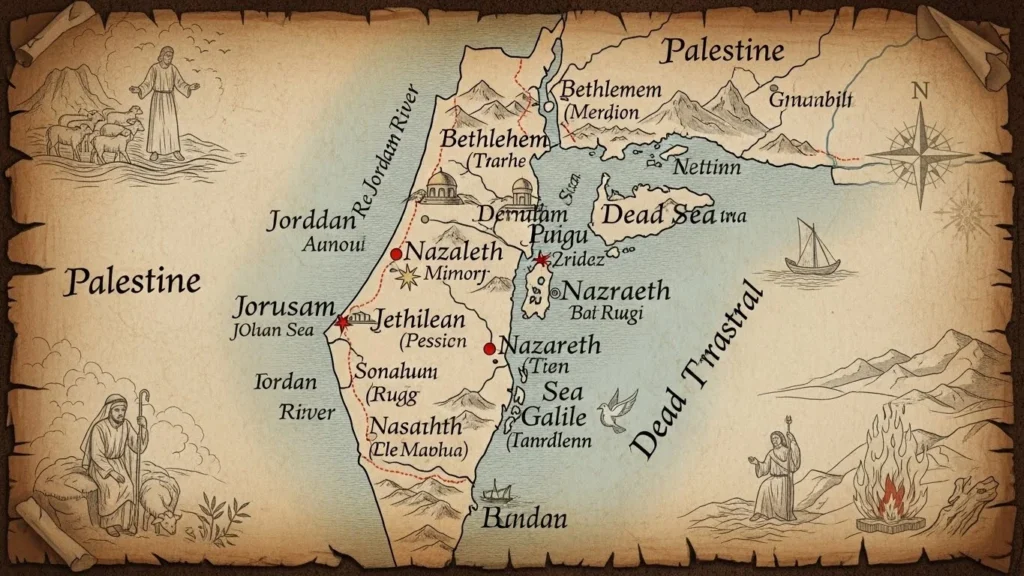
Palestine in the Bible Map
When people search for “Palestine in the Bible map,” they are usually looking for the geographical area where many biblical events occurred.
Key biblical locations include:
- Jerusalem
- Bethlehem
- Galilee
- Samaria
- Judea
Bible maps often show these regions rather than a political entity called Palestine.
Was Jesus Born in Palestine in the Bible?
According to the Bible, Jesus was born in:
“Bethlehem of Judea.” — Matthew 2:1
The Bible does not say “Jesus was born in Palestine.” Instead, it specifies Bethlehem in Judea.
From a historical and geographical perspective, Bethlehem was located in a region that is part of the historical area later known as Palestine, but the biblical text itself uses the name Judea.
When Was Palestine First Mentioned in the Bible?
The word “Palestina” appears in some English translations such as the KJV.
One of the earliest occurrences is:
“Rejoice not thou, whole Palestina.” — Isaiah 14:29 (KJV)
The name is related to the Philistines and their territory. Many modern translations instead use “Philistia” rather than Palestina.
Is Palestine Mentioned in the Quran?
Yes. The Quran refers to the Holy Land and places associated with the prophets, but it does not frequently use the modern political term “Palestine” in the way it is used today.
One often-cited passage is:
“O my people, enter the Holy Land which Allah has assigned to you…” — Quran 5:21
Islamic tradition associates this Holy Land with the region that includes present-day Palestine and surrounding areas.
The Quran’s focus is generally on the spiritual significance of the land and the stories of the prophets rather than on modern political boundaries.
Does the Word “Palestine” Appear in the Bible?
Most modern translations do not use the word “Palestine,” but a few older versions—such as the King James Version—use it in place of ancient terms like “Philistia.”
Palestine and Philistia Connection
In the Old Testament, the term “Palestine” in older English Bibles usually represents Philistia, the land of the Philistines on the Mediterranean coast.
Verse Featuring “Palestine” (KJV)
“Rejoice not thou, whole Palestine.” — Isaiah 14:29 (KJV)
This is a translation choice; the Hebrew term refers to Peleshet, meaning Philistia.
Palestine as Ancient Philistine Territory
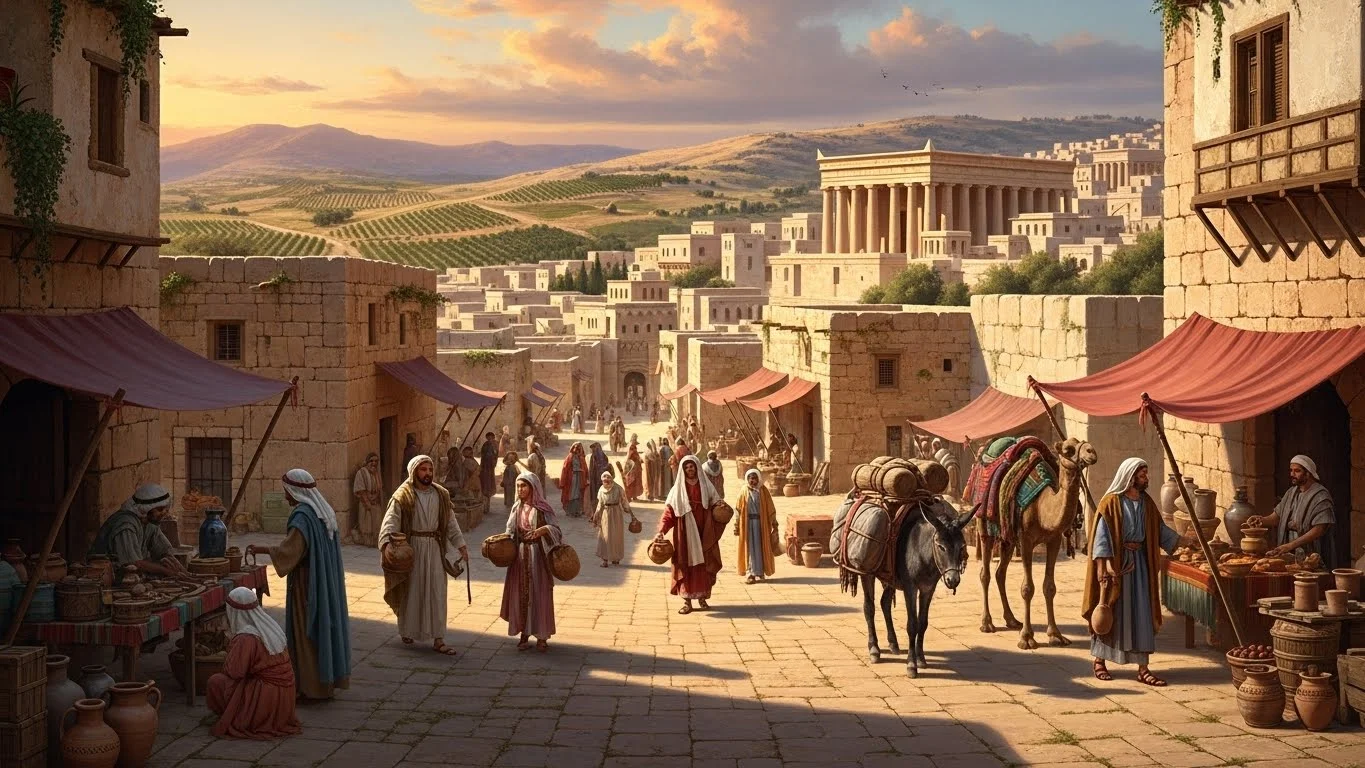
The Philistines lived in a coastal region with major cities like Gaza, Ashkelon, Ashdod, Ekron, and Gath—later associated with the term “Palestine” by translators.
Verse on Philistine Land
“The Philistines went up.” — 1 Samuel 7:7
This illustrates the region’s role in biblical history.
How the Name “Palestine” Developed
After biblical times, various empires—especially the Romans—used forms of the word Palaestina to describe the region.
Scripture Related to the Region
“He will judge the nations.” — Joel 3:12
The region was often part of international and political movements in biblical narratives.
Palestine and Geographic Boundaries
Biblical place names rarely match modern political borders, so the ancient region overlaps with present-day areas known by different names.
Verse on Land and Territory
“The land is Mine.” — Leviticus 25:23
This highlights God’s sovereignty over all lands.
Cultural Diversity in the Region
The area historically included Israelites, Philistines, Canaanites, and other groups who interacted throughout Scripture.
Verse on Nations
“From one man He made all nations.” — Acts 17:26
A reminder of shared origins despite diverse cultures.
Palestine in Post-Biblical History
The term became widely used during later historical periods, influencing modern references though not widely used in Scripture.
Verse on Generations
“His faithfulness continues through all generations.” — Psalm 100:5
History changes, but divine faithfulness remains.
Palestine and Biblical Prophecy
Prophecies referencing the region usually speak of specific peoples or movements rather than the modern usage of territorial names.
Verse on Sovereign Purpose
“The plans of the Lord stand firm forever.” — Psalm 33:11
God’s overarching purposes guide history.
Understanding Geographic Changes
Ancient names like Judah, Israel, Samaria, Canaan, and Philistia shifted over centuries as kingdoms rose and fell.
Verse on Wisdom
“Teach us to number our days.” — Psalm 90:12
This encourages thoughtful reflection on history and time.
Palestine and Modern Interpretations
Readers today should view biblical geography through its ancient terms rather than modern political concepts.
Verse on Peace Over Lands
“Seek peace and pursue it.” — Psalm 34:14
A reminder that harmony is a timeless calling.
Why Context Matters
Understanding geographical context helps avoid confusion and brings clarity to Scripture study.
Verse on Understanding
“Give me understanding, that I may keep Your law.” — Psalm 119:34
Wisdom comes from careful study.
