
3 Reasons for Divorce in the Bible Verses
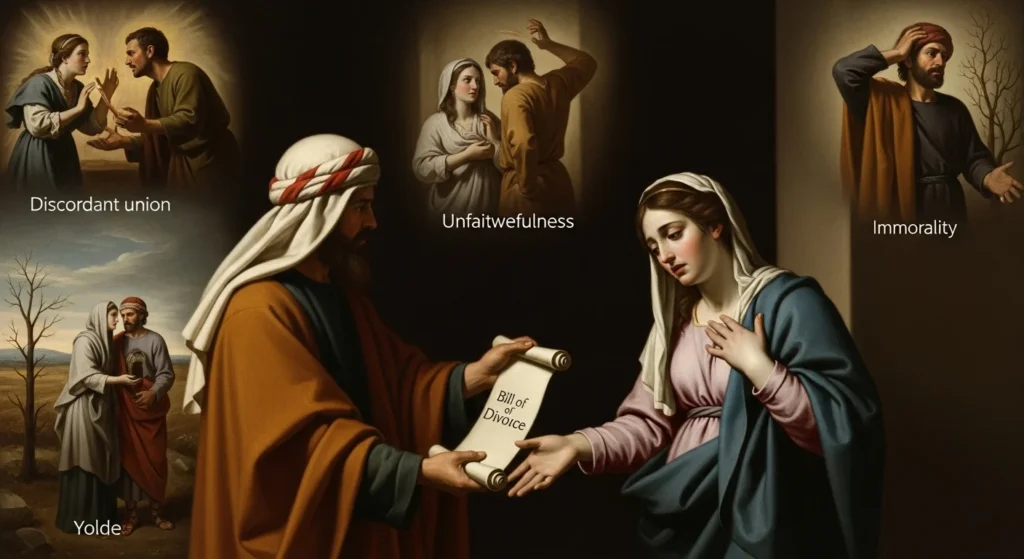
This topic focuses on biblical teachings regarding divorce. Christians hold different views on this subject, but two grounds are explicitly mentioned in Scripture, while a third is commonly recognized by many Christian traditions based on biblical principles.
The most commonly cited reasons are:
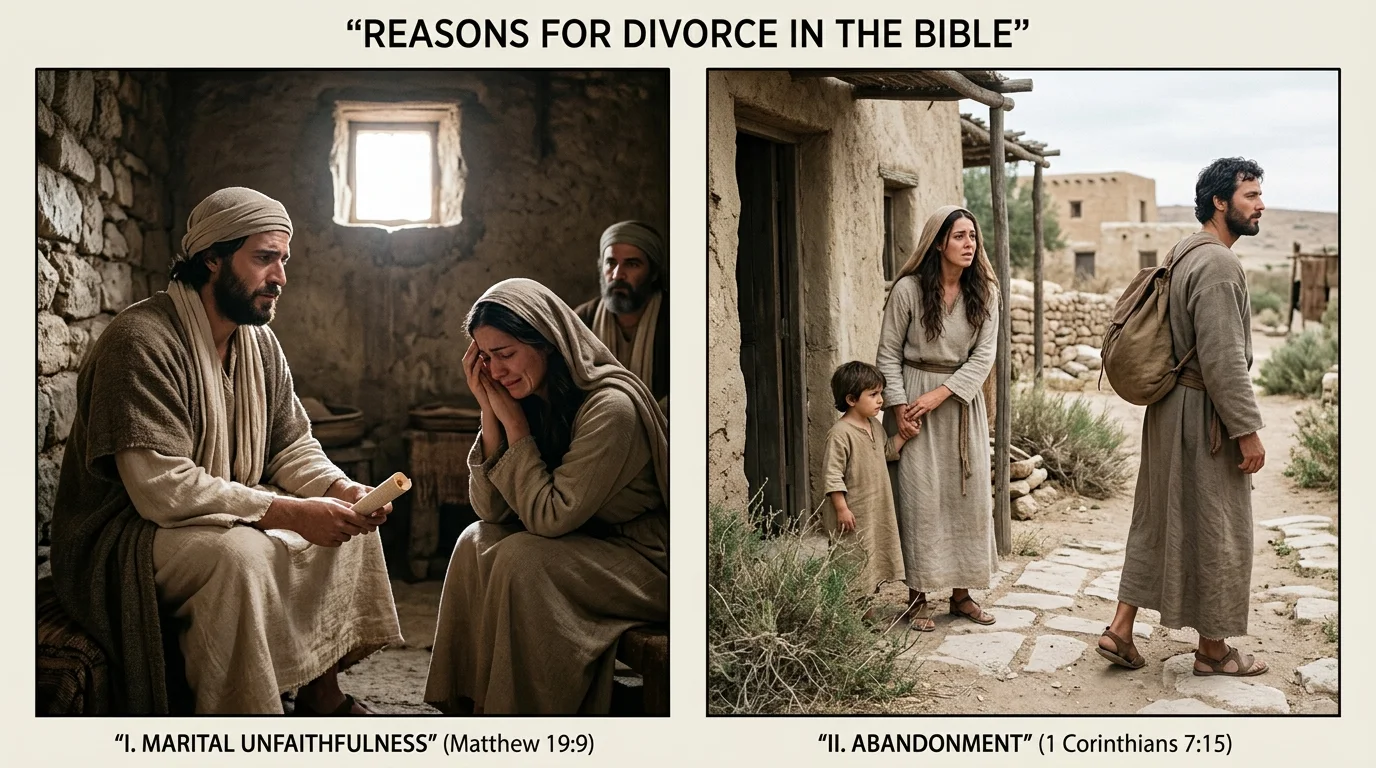
- Sexual immorality (adultery) — Matthew 19:9
- Abandonment by an unbelieving spouse — 1 Corinthians 7:15
- Serious violation of the marriage covenant — recognized by some Christian traditions based on broader biblical teachings about marriage and protection of spouses.
A key verse is:
“Whoever divorces his wife, except for sexual immorality, and marries another woman commits adultery.” — Matthew 19:9
Because interpretations vary among denominations, many churches encourage pastoral guidance when addressing divorce.
3 Reasons for Divorce in the Bible (KJV)
In the King James Version, the two clearest biblical grounds are:
1. Sexual Immorality
“Except it be for fornication.” — Matthew 19:9 (KJV)
2. Desertion by an Unbelieving Spouse
“If the unbelieving depart, let him depart.” — 1 Corinthians 7:15 (KJV)
3. Covenant Breaking
Some Christian teachers view severe and persistent covenant-breaking as a legitimate reason for separation and, in some traditions, divorce, though this is inferred rather than explicitly stated.
Four Biblical Reasons for Divorce
Different Christian traditions identify four possible grounds:
- Sexual immorality (Matthew 19:9)
- Abandonment by an unbelieving spouse (1 Corinthians 7:15)
- Severe abuse or endangerment (a view held by some churches based on biblical principles of protection and justice)
- Persistent covenant-breaking that destroys the marriage relationship
Only the first two are directly stated in Scripture. The latter two are interpretations held by some denominations and not universally agreed upon.
3 Reasons for Divorce in the Bible Verse Matthew
This query usually refers to Jesus’ teaching in the Gospel of Matthew.
The primary verse is:
“Whoever divorces his wife, except for sexual immorality, and marries another, commits adultery.” — Matthew 19:9
Matthew emphasizes sexual immorality as the explicit exception discussed by Jesus regarding divorce.
Is a Sexless Marriage Biblical Grounds for Divorce?
The Bible does not specifically identify a sexless marriage as a direct ground for divorce.
However, Scripture teaches that husbands and wives should not unnecessarily deprive one another of marital intimacy:
“Do not deprive each other except perhaps by mutual consent and for a time.” — 1 Corinthians 7:5
While prolonged refusal of intimacy can create serious marital difficulties, the Bible does not explicitly list a sexless marriage as a reason for divorce. Many pastors encourage counseling, communication, and reconciliation efforts before considering separation.
3 Reasons for Divorce in the Bible (NIV)
Commonly cited biblical grounds in the NIV include:
Sexual Immorality
“Except for sexual immorality.” — Matthew 19:9 (NIV)
Abandonment
“If the unbeliever leaves, let it be so.” — 1 Corinthians 7:15 (NIV)
Covenant Violation
Some Christian traditions include severe covenant-breaking as a third category, though this is based on interpretation rather than an explicit command.
Examples of Divorce in the Bible
The Bible records several references to divorce and broken marriages.
Examples include:
- The divorce laws given through Moses in Deuteronomy 24:1–4.
- God’s symbolic description of Israel’s unfaithfulness using divorce imagery in Jeremiah 3:8.
- Jesus’ teachings on divorce in Matthew 19.
- Paul’s instructions concerning marriage and separation in 1 Corinthians 7.
These passages help explain biblical teachings about marriage, faithfulness, and reconciliation.
What Does the Bible Say About Divorce and Separation?
The Bible presents marriage as a sacred covenant intended to be lifelong.
Jesus said:
“Therefore what God has joined together, let no one separate.” — Mark 10:9
At the same time, Scripture acknowledges that some marriages experience circumstances such as adultery or abandonment that may lead to divorce.
Regarding separation, Paul wrote:
“A wife must not separate from her husband. But if she does, she should remain unmarried or else be reconciled to her husband.” — 1 Corinthians 7:10–11
Overall, the Bible emphasizes faithfulness, forgiveness, reconciliation, and the preservation of marriage whenever possible, while also addressing situations where relationships have been seriously broken.
God’s Design for Marriage
“Therefore what God has joined together, let no one separate.” — Mark 10:9
This verse emphasizes the sacred unity of marriage, showing God’s original intention for lifelong commitment.
Understanding Hardness of Heart
“Moses permitted you to divorce… because your hearts were hard.” — Matthew 19:8
Divorce was acknowledged in Scripture due to human brokenness, not because it was ideal.

Peace in the Home
“If the unbelieving partner separates, let it be so.” — 1 Corinthians 7:15
This passage highlights that peace and freedom from ongoing conflict are important considerations.
Safety and Protection
“The Lord is a refuge for the oppressed.” — Psalm 9:9
Scripture underscores God’s heart for protecting those who suffer harm, which can relate to dangerous marriages.
Commitment to Truth
“Love does not delight in evil but rejoices with the truth.” — 1 Corinthians 13:6
When dishonesty dominates a relationship, this verse calls believers to uphold truth and integrity.
Healing from Betrayal
“You shall not commit adultery.” — Exodus 20:14
Unfaithfulness is a scriptural basis for broken trust and a reason divorce appears in biblical teaching.
Living Without Fear
“Perfect love drives out fear.” — 1 John 4:18
Relationships ruled by fear contradict God’s design for peace and safety.
Accountability in Relationships
“Each of us will give an account of ourselves to God.” — Romans 14:12
This reminds us that harmful actions in marriage carry personal accountability before God.
Restoration of Peace
“God has called us to live in peace.” — 1 Corinthians 7:15
This verse stresses that ongoing chaos or emotional turmoil is not God’s desire for any home.
Honoring the Covenant
“Let marriage be held in honor among all.” — Hebrews 13:4
Marriage is sacred, and violating its trust impacts the covenant deeply.
Protection from Oppression
“Do not oppress the widow or the fatherless.” — Zechariah 7:10
Scripture condemns oppression in all forms, including within marriage.
Wisdom in Difficult Situations
“If any of you lacks wisdom, you should ask God.” — James 1:5
For those facing marital crisis, this verse encourages seeking God’s direction.
Choosing Righteousness
“He has shown you what is good.” — Micah 6:8
This passage calls believers to justice, kindness, and humility—even in relational challenges.
Healing from Broken Promises
“A righteous person keeps an oath even when it hurts.” — Psalm 15:4
When promises are repeatedly broken, this verse highlights the seriousness of covenant faithfulness.
Seeking Safety and Stability
“He is my refuge and fortress.” — Psalm 91:2
This reassures those in unsafe marriages that God values their safety.
Support for the Brokenhearted
“He heals the brokenhearted.” — Psalm 147:3
Divorce often involves deep emotional pain, and God offers comfort and healing.
Call to Respect and Honor
“Honor one another above yourselves.” — Romans 12:10
Persistent disrespect or emotional harm contradicts biblical principles of love and honor.
God’s Care for the Vulnerable
“He upholds the cause of the oppressed.” — Psalm 146:7
This verse reminds us that God defends those mistreated in relationships.
Freedom from Bondage
“Where the Spirit of the Lord is, there is freedom.” — 2 Corinthians 3:17
This speaks to liberation from emotional, spiritual, or physical bondage in harmful marriages.
Hope for a New Beginning
“Behold, I am making all things new.” — Revelation 21:5
God offers renewal and restoration, even after painful endings.
