
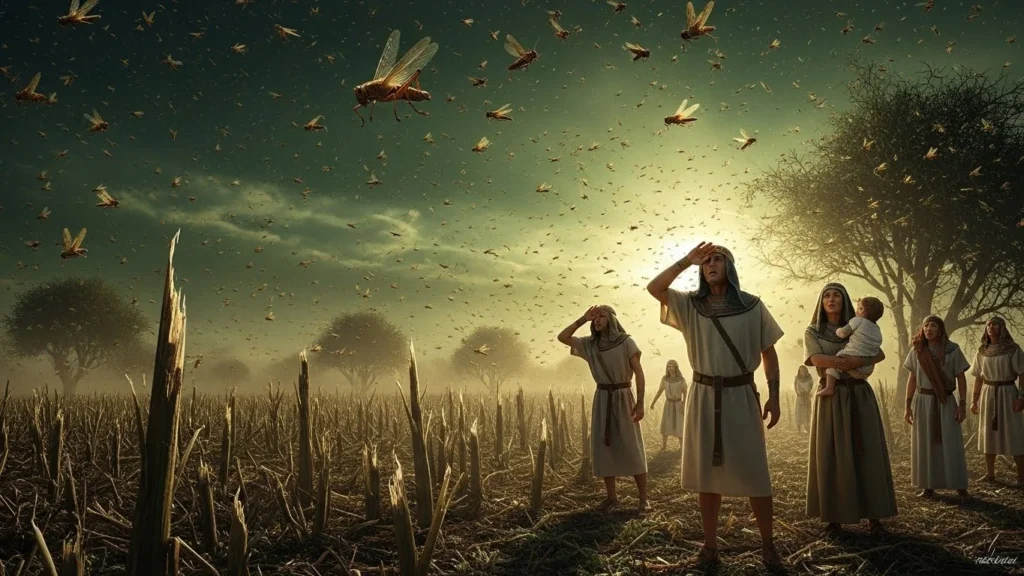
Locusts as a Sign of Judgment
“They covered all the ground until it was black.” — Exodus 10:15
Locusts appear as a powerful demonstration of divine authority over creation.
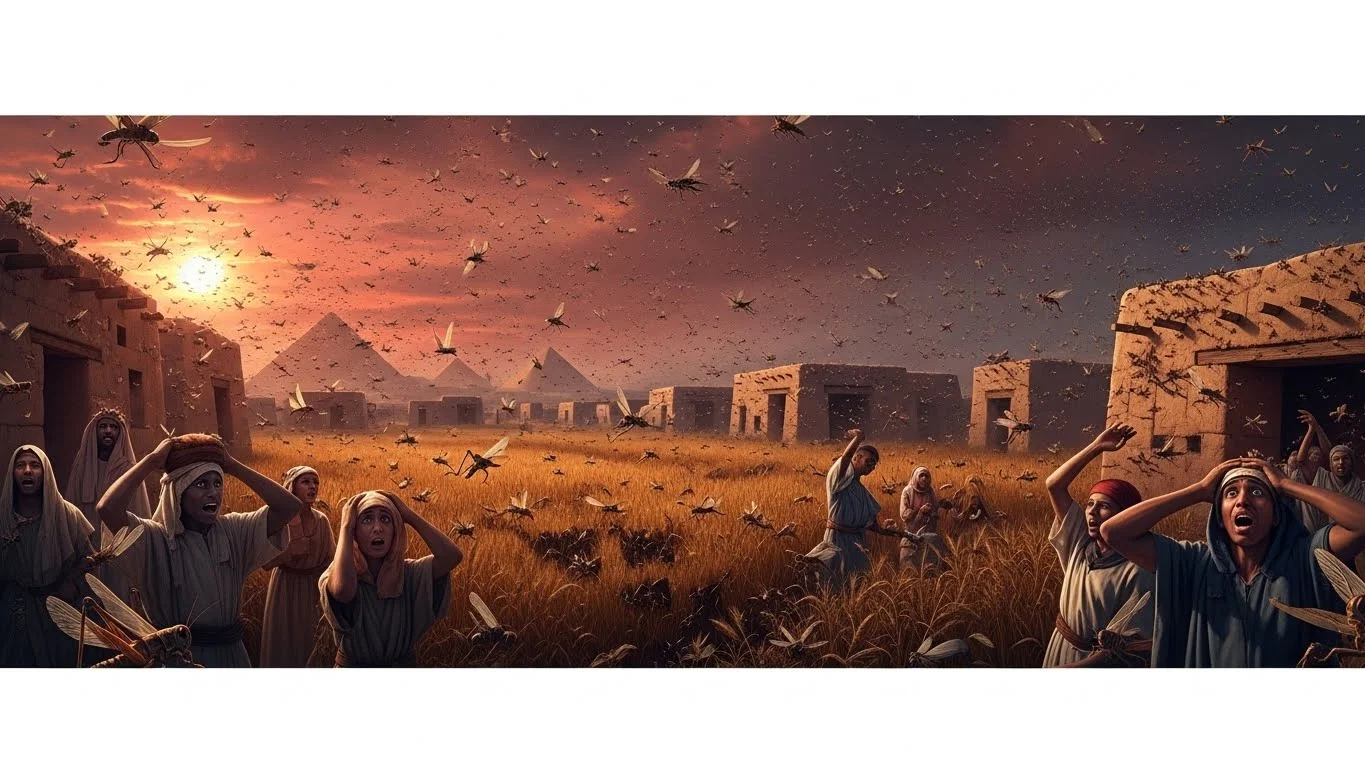
The Plague of Locusts
“If you refuse to let them go, I will bring locusts into your country tomorrow.” — Exodus 10:4
Locusts symbolize consequences that follow disobedience.
Locusts Consuming the Land
“What the locust swarm has left the great locusts have eaten.” — Joel 1:4
A vivid picture of total loss that calls for reflection and humility.
A Call to Return
“Rend your heart and not your garments.” — Joel 2:13
Even after destruction, God invites people back with compassion.
God’s Power Over Locusts
“The Lord changed the wind to a very strong west wind, which caught up the locusts and carried them into the Red Sea.” — Exodus 10:19
The same God who allows judgment also restores.
Locusts as a Symbol of Discipline
“You will sow much seed in the field but you will harvest little, because locusts will devour it.” — Deuteronomy 28:38
Locusts reflect spiritual lessons about consequences and alignment.
Locusts in Prophetic Warnings
“A day of darkness and gloom… like dawn spreading across the mountains, a large and mighty army.” — Joel 2:2
Locusts are used to depict overwhelming forces.
Restoration After Locust Damage
“I will repay you for the years the locusts have eaten.” — Joel 2:25
This promise highlights God’s ability to restore what was lost.
Locusts Representing Human Weakness
“They are like locusts in abundance.” — Nahum 3:17
Locust imagery is used to show instability and fragility.
Locusts as a Natural Threat
“He gave their crops to the locust.” — Psalm 78:46
A reminder of the natural challenges faced in ancient times.
Locusts and Humility
“He humbled you… then fed you manna.” — Deuteronomy 8:3
Locust devastation often led to renewed dependence on God.
Locusts in Wisdom Literature
“Locusts have no king, yet they advance together in ranks.” — Proverbs 30:27
A lesson on order, unity, and natural wisdom.
Locusts as a Metaphor for Destruction
“Before them the land is like the garden of Eden, behind them a desert waste.” — Joel 2:3
Locusts symbolize rapid, devastating change.
Locusts in Prophetic Imagery
“They looked like locusts prepared for battle.” — Revelation 9:7
Symbolic locusts are used to describe future spiritual realities.

Locusts as a Sign of Alarm
“Sound the alarm on my holy hill.” — Joel 2:1
The arrival of locusts signaled urgent attention.
A Call to Repentance in Times of Loss
“Let all who live in the land tremble.” — Joel 2:1
Locusts remind people to turn their hearts toward God.
Locusts and God’s Sovereignty
“Everything he does is right.” — Daniel 4:37
Even in seasons of locust-like devastation, God remains sovereign.

Locusts Teaching Spiritual Awareness
“Wake up, you drunkards, and weep!” — Joel 1:5
Locust events became moments for reflection and spiritual clarity.
Locusts Reflecting Divine Discipline
“Surely this great nation would perish.” — Amos 7:2
Locust imagery is used to express the seriousness of spiritual decline.
Locusts and Future Restoration
“The threshing floors will be filled with grain.” — Joel 2:24
After seasons of loss, God promises abundance and renewal.
