
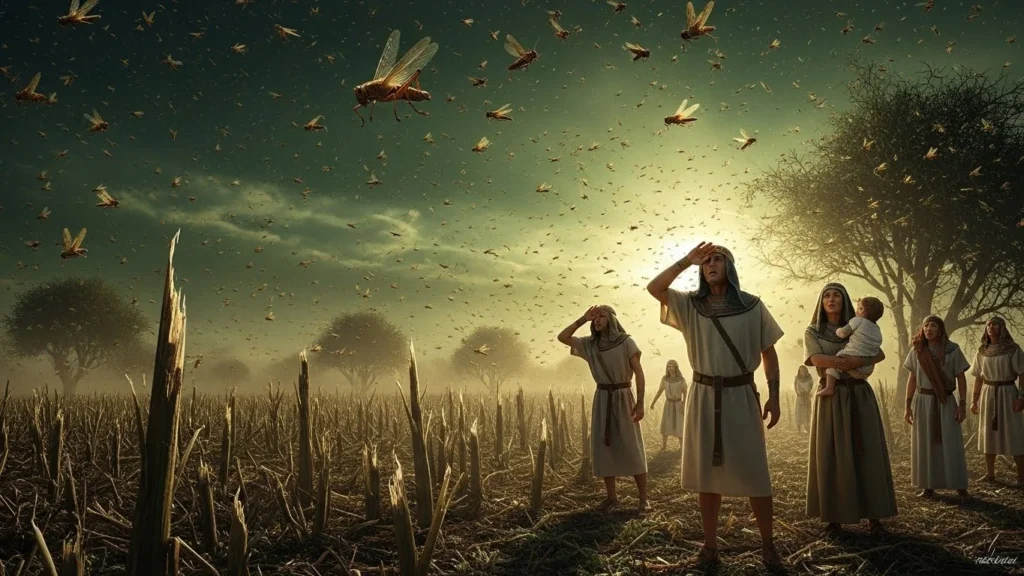
locusts in the bible

37+ Locusts in the Bible Meaning, Plagues & Symbolism

The topic of locusts in the Bible appears multiple times throughout Scripture and often carries powerful symbolic meaning. Locusts are frequently associated with destruction, judgment, and divine warnings, especially in the Old Testament. One of the most well-known references is the plague of locusts in Egypt, where they consumed crops and brought devastation as part of God’s judgment against Pharaoh.

Beyond physical destruction, locusts are also used symbolically in prophetic writings to represent overwhelming forces, spiritual consequences, or national judgment. Books like Joel describe locust swarms as both a literal disaster and a spiritual message calling people to repentance and return to God.

Locusts in Bible Revelation

In the Book of Revelation, locusts appear as part of a symbolic vision of judgment.

From the Book of Revelation:

“And out of the smoke locusts came down on the earth…” — Revelation 9:3

These locusts are not normal insects but symbolic beings representing spiritual judgment, torment, and chaos during end-time visions. They are often interpreted as a warning about spiritual darkness and consequences of sin.


Locusts in the Bible Exodus

In Exodus, locusts were one of the ten plagues sent upon Egypt.

From the Book of Exodus:

“They covered the surface of the ground so that it was black.” — Exodus 10:15

The locust plague represents:

  • God’s judgment on Egypt
  • Devastation of crops and economy
  • A call for Pharaoh to humble himself

It is a powerful symbol of divine warning and authority.


Locusts in the Bible Verse

Locusts are mentioned in several verses, often symbolizing destruction or judgment.

From the Book of Joel:

“What the locust swarm has left the great locusts have eaten…” — Joel 1:4

Locusts represent:

  • Loss and devastation
  • Consequences of disobedience
  • Need for repentance

Locusts in the Bible Food

In the Bible, locusts were also used as food.

From the Gospel of Matthew:

“His food was locusts and wild honey.” — Matthew 3:4

John the Baptist lived on:

  • Locusts (clean insects allowed in Leviticus 11:22)
  • Wild honey

This shows simplicity, humility, and devotion to God.


Locusts in the Bible Image

Symbolically, locusts in biblical imagery represent:

  • Swarms of destruction
  • Overwhelming judgment
  • Rapid loss of resources
  • Spiritual or moral decline

They are often shown as large swarms covering the land, representing unstoppable force.


Locusts in the Bible Joel

The Book of Joel strongly focuses on locusts as a metaphor.

From the Book of Joel:

  • Locusts symbolize invading armies or divine judgment
  • They destroy crops and bring famine
  • They call people to repentance and fasting

Joel uses locusts to show how quickly blessing can turn into loss without obedience.


Locusts in the Bible That John Ate

John the Baptist is known for eating locusts as part of his wilderness lifestyle.

From the Gospel of Matthew:

“His food was locusts and wild honey.” — Matthew 3:4

This represents:

  • Simple and humble living
  • Separation from worldly luxury
  • Spiritual focus and discipline

Locusts in the Bible John the Baptist

John the Baptist’s diet (locusts and honey) symbolizes:

  • Purity and simplicity
  • Prophetic lifestyle in the wilderness
  • Preparation for Jesus’ ministry

He is seen as a prophet who lived detached from worldly comforts to focus on God’s message.


Simple Summary

  • Revelation → locusts = symbolic judgment and chaos
  • Exodus → locust plague = divine punishment on Egypt
  • Joel → locusts = destruction and call to repentance
  • John the Baptist → locusts = simple, holy lifestyle food
  • Overall → locusts symbolize judgment, loss, or spiritual warning

Locusts as a Sign of Judgment

“They covered all the ground until it was black.” — Exodus 10:15
Locusts appear as a powerful demonstration of divine authority over creation.
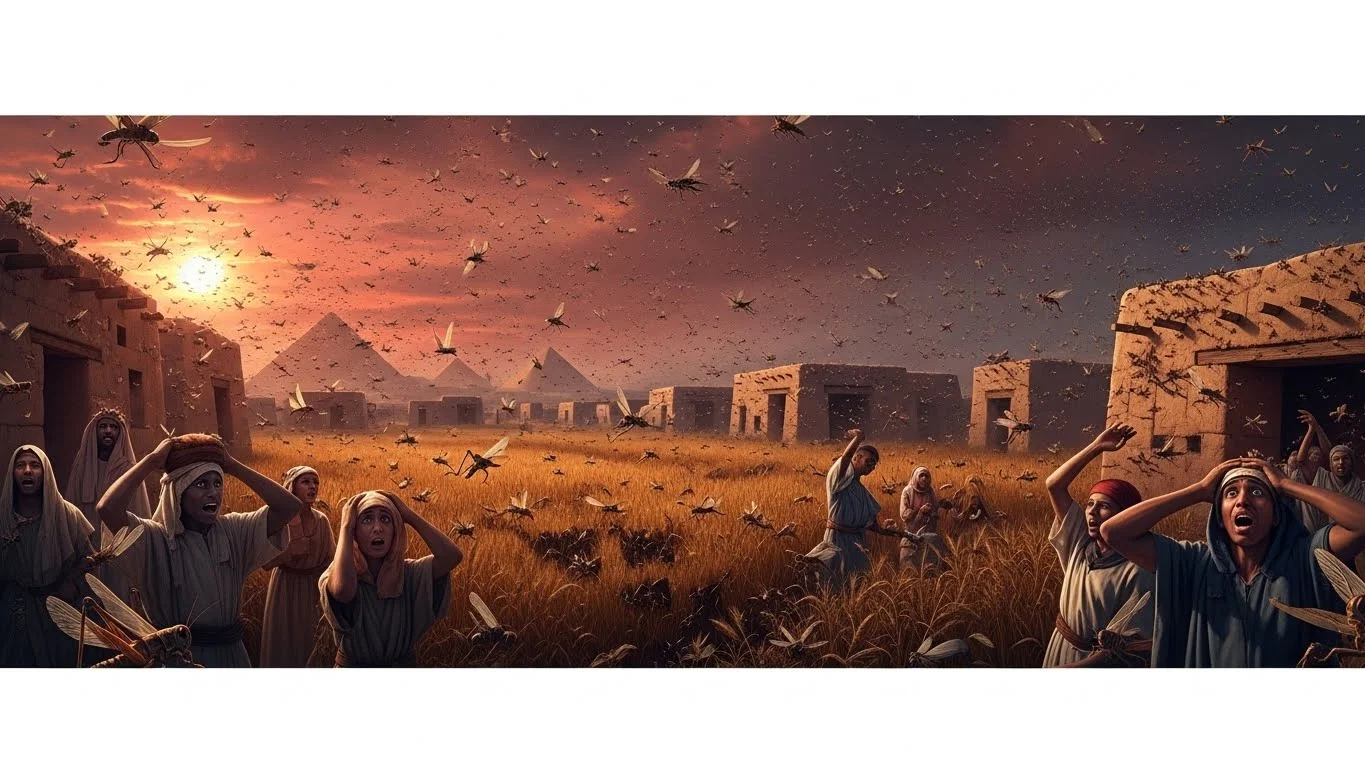
The Plague of Locusts

The Plague of Locusts

“If you refuse to let them go, I will bring locusts into your country tomorrow.” — Exodus 10:4
Locusts symbolize consequences that follow disobedience.

Locusts Consuming the Land

“What the locust swarm has left the great locusts have eaten.” — Joel 1:4
A vivid picture of total loss that calls for reflection and humility.

A Call to Return

“Rend your heart and not your garments.” — Joel 2:13
Even after destruction, God invites people back with compassion.

God’s Power Over Locusts

“The Lord changed the wind to a very strong west wind, which caught up the locusts and carried them into the Red Sea.” — Exodus 10:19
The same God who allows judgment also restores.

Locusts as a Symbol of Discipline

“You will sow much seed in the field but you will harvest little, because locusts will devour it.” — Deuteronomy 28:38
Locusts reflect spiritual lessons about consequences and alignment.

Locusts in Prophetic Warnings

“A day of darkness and gloom… like dawn spreading across the mountains, a large and mighty army.” — Joel 2:2
Locusts are used to depict overwhelming forces.

Restoration After Locust Damage

“I will repay you for the years the locusts have eaten.” — Joel 2:25
This promise highlights God’s ability to restore what was lost.

Locusts Representing Human Weakness

“They are like locusts in abundance.” — Nahum 3:17
Locust imagery is used to show instability and fragility.

Locusts as a Natural Threat

“He gave their crops to the locust.” — Psalm 78:46
A reminder of the natural challenges faced in ancient times.

Locusts and Humility

“He humbled you… then fed you manna.” — Deuteronomy 8:3
Locust devastation often led to renewed dependence on God.

Locusts in Wisdom Literature

“Locusts have no king, yet they advance together in ranks.” — Proverbs 30:27
A lesson on order, unity, and natural wisdom.

Locusts as a Metaphor for Destruction

“Before them the land is like the garden of Eden, behind them a desert waste.” — Joel 2:3
Locusts symbolize rapid, devastating change.

Locusts in Prophetic Imagery

“They looked like locusts prepared for battle.” — Revelation 9:7
Symbolic locusts are used to describe future spiritual realities.

Locusts as a Sign of Alarm

Locusts as a Sign of Alarm

“Sound the alarm on my holy hill.” — Joel 2:1
The arrival of locusts signaled urgent attention.

A Call to Repentance in Times of Loss

“Let all who live in the land tremble.” — Joel 2:1
Locusts remind people to turn their hearts toward God.

Locusts and God’s Sovereignty

“Everything he does is right.” — Daniel 4:37
Even in seasons of locust-like devastation, God remains sovereign.

Locusts Teaching Spiritual Awareness

Locusts Teaching Spiritual Awareness

“Wake up, you drunkards, and weep!” — Joel 1:5
Locust events became moments for reflection and spiritual clarity.

Locusts Reflecting Divine Discipline

“Surely this great nation would perish.” — Amos 7:2
Locust imagery is used to express the seriousness of spiritual decline.

Locusts and Future Restoration

“The threshing floors will be filled with grain.” — Joel 2:24
After seasons of loss, God promises abundance and renewal.

FAQs

Why are locusts important in the Bible?
They symbolize judgment, destruction, and spiritual awakening, while also pointing to restoration.

Do locusts appear only in the Old Testament?
No. They appear in both the Old and New Testaments, including symbolic imagery in Revelation.

What do locusts spiritually symbolize?
They often represent consequences, loss, urgency, humility, and renewal.

Why did God use locusts as a plague?
Locusts demonstrated divine power and served as a corrective sign to Pharaoh.

What does Joel teach about locusts?
Joel uses locusts to describe devastation but also emphasizes God’s promise of restoration.

Are locust attacks historical or symbolic in the Bible?
Both—some passages describe real events, others use locusts symbolically.

Do locusts represent spiritual warfare?
In prophetic books, locust imagery can symbolize overwhelming spiritual forces.

Can God restore what locusts destroy?
Yes, several verses focus on divine restoration after seasons of loss.

Were locusts common in biblical lands?
Yes. Locust swarms were known and feared for their ability to devastate crops.

What LSI keywords relate to this topic?
“Locust plague in Scripture,” “biblical symbolism of locusts,” “Bible verses about destruction,” “restoration in the Bible.”

Conclusion

Reflecting on locusts in the Bible reveals deep lessons about humility, spiritual awareness, and the renewing power of God. Scripture uses locusts to illustrate devastation, warning, and the need for realignment with divine truth—but it also shows God’s desire to restore, rebuild, and renew. May these passages help you understand both the seriousness of spiritual decline and the hope of restoration that follows.

Scroll to Top