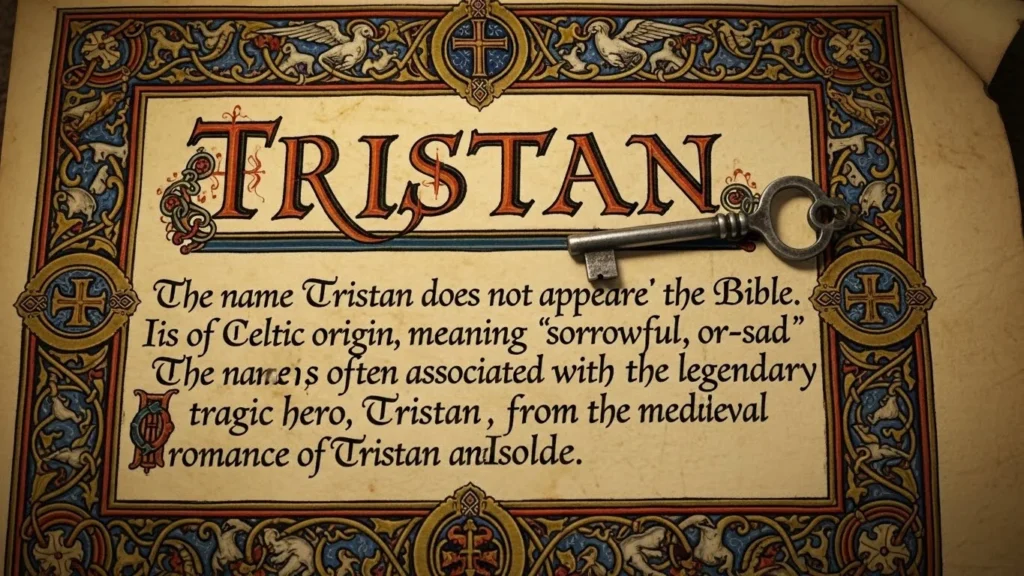
Many people wonder what does the name Tristan mean in the Bible, especially when choosing meaningful names with spiritual significance. Interestingly, the name Tristan does not appear in the Bible and does not have a direct Hebrew or biblical origin. Instead, Tristan is believed to come from Celtic or Latin roots, often associated with meanings like “sorrowful,” “bold,” or “tumult.” It became widely known through medieval stories, particularly the legend of Tristan and Isolde.
Even though Tristan is not a biblical name, people often look for spiritual meaning or symbolic connections within Christianity. In a broader sense, names like Tristan can still be associated with themes found in the Bible, such as love, struggle, loyalty, and perseverance through hardship.
In this article, we will explore the origin of the name Tristan, its historical background, and how people sometimes interpret it in a spiritual or symbolic way alongside biblical values.

Tristan Meaning in Greek
The name Tristan is most commonly traced back to Celtic and Old French origins rather than directly from Greek. However, when people try to interpret it in a Greek context, they often relate it to similar sounding words connected to “tristis” (Latin influence into Greek/European usage) meaning sad or sorrowful, though this is not its original linguistic root.
The more accepted meaning of Tristan comes from the Celtic tradition:
- It is often linked to the idea of “noise” or “tumult”
- In later French tradition, it became associated with “sorrowful” or “sad one”
In literature, especially in Arthurian legend, Tristan is known as a tragic romantic hero.
Tristan Name Origin
The name Tristan (Arthurian legend) originates from Celtic and medieval European literature.
Key origins include:
- Celtic root “Drustan” or “Drust”
- Later adapted into Old French as “Tristan”
- Popularized in the medieval romance Tristan and Isolde
The name became widely known through stories of love, loyalty, and tragedy, making it a symbol of deep emotional storytelling in European literature.
Meaning of Calvin
The name Calvin comes from the Latin name Calvinus, which is derived from calvus, meaning “bald”.
Meaning summary:
- Literal meaning: bald or hairless
- Symbolic meaning: Often interpreted as humble or simple
The name became well known through John Calvin, a major figure in Christian history and theology. Because of him, the name is often associated with discipline, reform, and religious study.
Tristan Pronunciation
The pronunciation of Tristan is simple and commonly consistent in English:
- TRIS-tən (most common English pronunciation)
- Phonetic spelling: /ˈtrɪs.tən/
Breakdown:
- “Tris” sounds like triss (rhymes with “miss”)
- “tan” becomes a soft “tən” sound
In French-influenced pronunciation, it may sound slightly more like “TRee-stan”, but English usage is the most widespread today.

Strength in Purpose
“The Lord is my strength and my shield.” — Psalm 28:7
This verse reflects qualities often linked with the name Tristan, reminding us that inner strength comes from God.
Courage in Uncertainty
“Be strong and courageous… for the Lord your God goes with you.” — Deuteronomy 31:6
A reminder that courage grows when you trust in God’s presence.
Peace in Identity
“You will keep in perfect peace those whose minds are steadfast.” — Isaiah 26:3
A steady heart and mind reflect the peaceful meaning many associate with Tristan.
Wisdom for Decisions
“If any of you lacks wisdom, ask God.” — James 1:5
Wisdom helps shape identity and guides anyone seeking clarity.
Hope in Hard Times
“May the God of hope fill you with all joy and peace.” — Romans 15:13
This verse mirrors the hopeful resilience tied to the name Tristan.
Purpose in Calling
“For I know the plans I have for you…” — Jeremiah 29:11
Identity is strengthened when rooted in God’s plan and purpose.

Strength Through Trials
“When you pass through the waters, I will be with you.” — Isaiah 43:2
This speaks to endurance, reflecting God’s support during difficult moments.
Identity Rooted in God
“See, I have engraved you on the palms of my hands.” — Isaiah 49:16
A powerful reminder that identity is cherished by God.
Peace in the Storm
“He makes the storm a calm.” — Psalm 107:29
A comforting verse for anyone seeking emotional calm and stability.
Renewing the Mind
“Be transformed by the renewing of your mind.” — Romans 12:2
Spiritual renewal brings clarity, strength, and deeper purpose.
God’s Steadfast Love
“The steadfast love of the Lord never ceases.” — Lamentations 3:22
A verse reassuring us of God’s constant care and compassion.
Guidance on the Path
“Your word is a lamp to my feet.” — Psalm 119:105
God offers guidance during seasons of uncertainty.
Confidence in Truth
“The Lord will be your confidence.” — Proverbs 3:26
A reminder that true confidence is rooted in God, not circumstances.
Resilience in Spirit
“I can do all things through Him who strengthens me.” — Philippians 4:13
A verse emphasizing spiritual resilience and endurance.
Calm for the Heart
“Do not let your hearts be troubled.” — John 14:1
A comforting reminder to trust God during times of stress.
Rest for the Soul
“In peace I will lie down and sleep.” — Psalm 4:8
This verse encourages rest and reassurance for weary hearts.
Stability in God
“He alone is my rock and my salvation.” — Psalm 62:2
God becomes a steady foundation for identity and purpose.
Light in Darkness
“The Lord is my light and my salvation.” — Psalm 27:1
A verse reminding us of divine clarity and hope in uncertain times.
Trust in God’s Plan
“Trust in the Lord with all your heart.” — Proverbs 3:5
A call to rely on God’s wisdom rather than personal understanding.
Courage Rooted in Peace
“Peace I leave with you; my peace I give you.” — John 14:27
A reminder that lasting peace comes from God.
FAQs
What does the name Tristan mean in the Bible?
The name Tristan does not appear in the Bible, but its associated themes—strength, courage, and resilience—are reflected in many biblical verses.
Is the name Tristan considered spiritual?
Yes, many view Tristan as a name connected with qualities like emotional depth, bravery, and inner strength.
Does the Bible mention the origin of Tristan?
The Bible does not include the name Tristan; it traditionally has Celtic and medieval roots.
Can biblical verses help explain Tristan’s meaning?
Yes. Verses about courage, purpose, identity, and peace reflect the spiritual symbolism attached to the name.
Is Tristan a meaningful name for someone seeking spiritual depth?
Absolutely. Its symbolic themes align well with biblical concepts of strength, purpose, and peace.
What spiritual traits are commonly linked with the name Tristan?
Qualities such as courage, emotional strength, resilience, and purpose-driven living are often associated with Tristan.
How can someone named Tristan find deeper meaning through Scripture?
By reflecting on verses that highlight purpose, courage, identity, and spiritual renewal.
Are there Bible verses that strengthen the mind connected to Tristan’s meaning?
Many verses encourage inner strength, mental clarity, and spiritual focus.
Is the name Tristan used among people of faith?
Yes, it is widely used by individuals and families who appreciate its symbolic meaning.
How does the meaning of Tristan relate to spiritual purpose?
Its themes align with biblical principles of inner strength, trust in God, and living with purpose.
Conclusion
Exploring 69+ what does the name Tristan mean in the Bible reveals that, although the name itself does not appear in Scripture, the qualities associated with it—strength, hope, peace, and courage—align beautifully with God-centered teachings. These Bible verses for peace and purpose offer guidance, clarity, and encouragement for anyone seeking spiritual understanding. As you continue to meditate on Scriptures to strengthen your mind, may you find renewed purpose and lasting comfort.